What Do Most Successful People Have in Common?
They get up earlier than Most!
Most people start their day on 'auto-pilot', simply 'going through the motions', snoozing, checking social media and drifting until they absolutely have to wake up, get up and get into gear! In short, most people simply obey their unconscious program, or 'paradigm'.
Harvard Biologist Christoph Randler discovered that early risers are more proactive. They're also more likely to anticipate problems and minimise them efficiently, which leads to more success, especially those in the business world.
Whilst some get up at 4 am as I do, a range from 4 am to 6 am is the norm, and even 7 am is still considered to be early by the standards of many.
Check out who just a few of the early risers are...
- Apple CEO Tim Cook - 3:45 am
- Dwayne "The Rock" Johnson is already in the gym by 4 am to get an edge on the competition
- PepsiCo CEO Indra Nooyi rises at 4am
- Starbucks Exec Howard Schultz gets up at 4:30 am
- Richard Branson wakes up at about 5:45 am
- Gary Vaynerchuk wakes up at 6 am
- Oprah Winfrey usually wakes up (naturally) between 6:02 and 6:20 am
Some of them get straight to the "to-do's" they have "to-do", but most start with some form of exercise, meditation and breakfast, me included, but with one additional element. Read on...
The Problem
Emotional stress, poor nutrition, bad eating or drinking habits and irregular sleeping habits are the main reasons we still feel groggy and tired when awake. We are tricked into thinking we just need more sleep!
But we don't!
What we actually need is discipline, structure and better choices!
You Might be Wondering; Why Get up So Early?
For me, it's all about the psychological and motivating effects of getting a head start on the day before the distractions and obligations kick in. Imagine attacking the day on your own terms, which gives you a sense of direction and control throughout the day.
Rising in the early morning hours enable you to become proactive instead of reactive; for example, reactive to family needs, emails, missed calls and other demands on your time. When speaking to my audiences about this, I explain how I 'bookend' my days with what I call 'me time'.
| ‘Me-Time’ | The Day | ‘Me-Time’ |
During 'me-time', the phone remains switched off. This is an absolute rule. For the most part, nobody can get me on the phone from around 9:00 pm until about 9 or even 10:00 the following day. I joke with clients and audiences, "I bought my phone for my convenience, not yours"!
Periodically, I will even have a whole, blissful weekend with all electronics switched off! I control how and when I am contactable by occasionally turning the phone off; I even go out without it sometimes. By contrast, observe people at a train station or on a bus addicted and glued to their phones, earbuds and headphones.
My days, as well as the weekends, look something like this...
04:00 Wake up - Get up
04:01 ESSENTIAL first task - MAKE THE BED! (I'll write about the power of this another time).
04:15 - Exercise: (Running outdoors, cycling or mostly, the gym).
Exercise changed my life when I couldn't walk properly due to debilitating spinal injuries. (Another story, for another time). But more than healing the physical condition, it changed my brain too. Exercise causes the brain to release a chemical called a neurotrophic factor, which boosts brain function. This increases your mental and physical stamina, provides energy and boosts motivation, leading to increased productivity. This is how I went from being broke and broken, obese and depressed, to becoming a fit, healthy, focused and motivated, International business management consultant in just eighteen months.
My "morning mindset motivational" routine, as I like to call it, includes all six of the proven practices for sustainable personal development and success. Here, I'll share three of them, and we can discuss the other three during our coaching sessions to build on what you learn here:
- Exercise
- Meditation
- Reading / Learning /Studying
The routine usually begins with exercise for about an hour, on five or six days of the week. I leave the sequence flexible because it depends on the time of year, which country I am in and sunrise times. I just love to witness and observe the sun coming into view each day. Sunrise is to me what New Years eve is to most - my 'cosmic marker', or "stick in the sand" if you like, that signals the end of the last 24 hours - time to reflect upon what I loved, appreciated and learned from - and the start of a new 24 hours in which to plan, intend and declare what I want it to look and feel like. This is a vital part of my morning routine, so naturally, my routine sequence changes to accommodate sunrise times.
I sit for a guided or Vipassana meditation for thirty to sixty minutes. Remember, I have built up to that over twenty years, so if you are new to meditation, ten to fifteen minutes is enough, to begin with. In business environments, especially when coaching or training CXO Leadership programs, I am still surprised at the reactions to the woo-woo word 'meditation'. Meditation IS NOT what you might think and there are many, many ways to do it that doesn't involve sitting in impossible positions and floating in the air!
Ariana Huffington, Marc Benioff, Jeff Weiner, Tim Ferris and so many other world class CEOS, Leaders and successful entrepreneurs have a rigid "meditation" practice as a part of their day and for good reasons. So if the 'M' word is to 'trippy' for you at the moment, replace it instead with the word 'silence' or 'sitting doing nothing'!
Either way, keep in mind that meditation has absolutely nothing to do with any dogma, or religion or stereotype and everything to do with your mental health, clarity, self-awareness, emotional intelligence and so much more. In short, it's about 'being' human!
Meditation is a proven method for reducing stress, improving resilience and your overall health. It's an essential tool for connecting with yourself and whatever you call your divine source energy that creates all that is. This helps to remain grounded yet expansive in consciousness. This results in much higher levels of mental clarity, improved mindfulness and blissful equanimity.
Meditating in the early hours feels different to the same practice later in the day. It's much easier and feels more deeply connected than at any other time. In the early hours, there are no distractions anywhere, even outside and alignment with your source or core energy is easier and more apparent, making the reception and discernment of inspired thoughts, answers to questions and desired manifestations a cinch. If you have yet to learn what that last sentence even means, don't worry, I had no idea this stuff even existed when I left the police service. What I can tell you as a fact is that trying to transition and transform yourself without it is futile. Sorry! There are no hacks or shortcuts despite what the marketers tell you.
Moving on - post meditation, I have a period of time reading, studying and learning. This, together with the other three pillars I alluded to earlier, completes my magical 'Morning Mindset Motivation', or put another way, my 'me time'.
By around 08:00 am, I have been up for four hours, I'm wide awake, I've had quality 'me-time', and I feel inspired, focused, motivated and ready for the day - and ready to serve.
If you want to retake control of your life - or a part of it- I encourage you to start with a robust morning routine that helps inspire and create changes. All external change outside of you first begins within, with new thinking, new actions, behaviours and habits.
"Be not conformed to the world,
but be transformed by the renewing of your mind."
- Romans 12:2

The
Solution?
Take Control Back!
Begin with your Mind!
When you wake up 'naturally', it's your body's signal to say that you have slept enough. But many people ignore the sign, roll over and go back to sleep. This is a mistake because the chances are, later on, you will be woken by your alarm partway through a new sleep cycle and feel 'groggy' for hours.
“This is an age in which the mood decides the fortunes of people rather
than the fortunes decide the mood.” — Sir Winston Churchill
So, no matter how you feel upon waking - alert, tired, grumpy or excited for the day ahead, adopt this really simple 'guiding principle':
"Wake Up - Get Up"!
Just this one simple 'rule' [or choice] alone changed everything for me. Resisting the temptation to go back to sleep because my mind created a barrage of stories, tales and lies to justify it; "I'm still tired", "it's too cold outside", "that dream was really nice", or "Come on, it's Sunday"! -Thanks, but NO! - the rule is 'Wake up - Get up'!
Often - especially in the early days of recalibrating my brain, I would jump out of bed like a 'zombie' still half asleep and clumsily put my running gear on and stumble through the door into the dark, cold morning air. The idea was to trick my brain and get out of the door before it realised what I was doing and before it could start talking me into staying in bed.
I tried every trick in the book to create and ingrain the new habit to 'wake up - get up - get out! Often I left my sports clothes laid out on the floor in a trail from the bed to the bathroom - socks, underwear, shorts, T-shirt; putting on each piece of clothing as I fumbled my way to the loo! By the time I reached the bathroom, I was already dressed! - even if some article of clothing was occasionally inside-out or back-to-front, who cares? No one is going to see me at that time in the morning!
These days, the process is automatic. Mostly I wake up just before 4 am without an alarm and just get up and start the day. I once thought that achieving this would be impossible for someone like me!

How to Start Getting up Earlier!
What follows is not meant to be, nor claim to be, a complete expose of the science of sleep or circadian rhythms. I studied, researched and experimented. What follows is only what worked for me. I have been consistently getting up at 4 am for almost three years now at the time of writing this in 2019; before that, I was a 5 am riser for a long period of time and before that, much, much later.
My biggest challenge is not getting up early but going to bed earlier than I used to. I am often still wide awake at 10 pm, and my inner voice attempts to convince me that now is a perfect time for a snack! Or to watch a movie! Tempting, but NO! I go to bed, 'monkey-mind' surrenders and amazingly fall asleep within minutes.
Like many others I talk to on this subject, before I made this change, I considered myself a 'night owl' that functioned better at night. I hear the same from many people during my talks and seminars when I address this topic. I now know I was only a so-called "night owl" because that's how I trained my brain to be. Now I have re-trained my brain to do it another way that I prefer.
What follows next is how I did it.

Step 1. Calibrate
For three to five nights, go to bed at the same time and go to sleep as usual. Notice and record what time you naturally wake up without an alarm (or without a cat, dog, child or spouse jumping on you!). If you are jumped upon, you are very blessed, so be happy, but you will have to start the calibration process again until you have enough data from five consecutive nights to rely upon.
The amount of time sleeping before naturally floating gently out of your sleepy heaven is generally the amount of time you need.
At this point of waking, many are tempted to roll over and go back to sleep because either it is half an hour before you need to get up, or it feels too cosy, or because it's Sunday etc. This is the worst thing you can do because if you go back to sleep at this point, you will begin a new sleep cycle, and when you wake up again later, you will be in the middle of a new sleep cycle. You will be groggy and potentially grumpy for hours, perhaps needing caffeine to wake yourself up.
Adopting my rule "Wake up - Get up" avoids this pitfall and, in the long term, improves your energy and levels of alertness when you first wake up.
PB Inspired High-Performance Coaching and Training
It's Time to Bounce Back!
With clients as far as USA and around Europe, Check out the "PB Inspired" Empowering and Powerful 'High-Performance Coaching' Packages.
Step 2 - Calculate
Now that you know how much sleep you need, you need to decide what time you want to get up and, therefore, what time you need to go to bed to achieve your desired sleeping hours.
An essential factor in feeling fresh is waking up towards or at the end of a sleep cycle, not in the middle of it. A sleep cycle is ninety minutes. Most adults need an average of four to six cycles per night.
So, for example:
- I calibrated that I need a minimum of four cycles
- I want to get up a 4 am.
- Four x 1.5 hours (90 minutes) is six hours
- 4 am minus six hours is 10 pm
Therefore, my bedtime is 10 pm or as close to it as possible. Occasionally going to bed at 11:30 pm does not affect me too much, provided I still wake up at the end of the cycle at 04:00.
There are several websites you can choose to use to help calculate this for you.
Step 3 - Incremental Steps
Whatever time you are getting up today, instead of taking a massive leap backwards to a time that feels like 'Stupid-O-Clock'! - gradually ease yourself into it by stepping it back in fifteen or thirty minutes increments at a time. Remain at the new time for a week or two and then step back again and again until you reach your desired target time.
Avoid staying on track throughout the week only to declare the weekend a 'lay-in' day or days. You will confuse your brain, undo your new programming, and struggle to get up early again the following week. Effectively, you will be back to day one.
What Can You Expect When You First Start?
At first, you might feel sleepy, but it is normal. Remember, you are changing old habits and past programming, and your brain won't like it at first. There will be some resistance!
However, like all new habits, if you stay with it for at least two weeks, you will start to feel better. Remember that by getting up at the same time every day, your circadian rhythm (or body clock) will stabilise, helping your productivity to rise, improving your sleep and decreasing possible insomnia and sleep deprivation.

It is also scientifically proven that it reduces your caffeine dependence, improves alertness, sharpens your focus and short-term memory, decreases your irritability and pain, improves your mood and immune system functioning and helps you with better safety and job performance.
Isn't that worth 'hanging in there' for?
In short - Decide your 'get up' time and stick to it! That's the deal. Deal?
Stay with it for thirty days, and you'll wonder why you didn't do it sooner! Keep it going for three months - your transformation will be complete and wired in. You will officially be a part of the successful "early bird" club, along with all of the other big names mentioned earlier, and as with all early birds, all of the metaphorical worms that life can offer will be yours to catch!
Related Topic:
'Morning Mindset Motivation'.
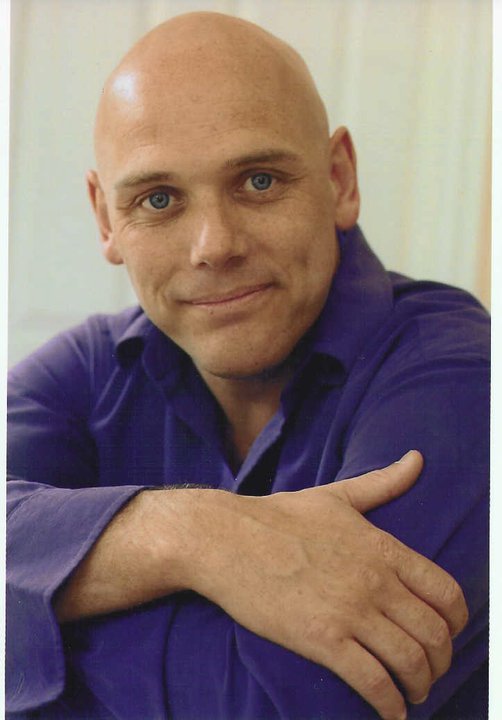

Paul Bellard is an International, Executive High-Performance Coach, Inspirational Conference Speaker and Leadership / Organisational Change Trainer.
He has worked in over eighty cities in thirty countries around the world and specialises in "Bounce-Back, " and 'Change' Strategies.
His personal mission is to:
Educate, Motivate and Inspire Empowered Change and Transformation
for Companies, Executives and their Employees
During times of Growth, Challenge and Transition.
He achieves this using:
World-Class Learning and Development Programs created
to help access breakthrough performance levels in three formats:
Conference Keynotes
Corporate Training
Executive High-Performance Coaching
(Group or 1-2-1)
For more information, check out:
www.paulbellard.com
To View the PB Inspired Speaker sheet and Bio, Visit:
Inspiring Story, Bio and One-Page Speaker Sheet
To inquire about personal 1-2-1 or company coaching, speaking or training contact: sarah@paulbellard.com
or Better Still